Is the Riemann hypothesis solved? Where the claimed proof stands
An Anthropic mathematician says he proved the Riemann hypothesis with Claude. Lean checks pass, but there is no peer review, readable proof or prize yet.
Not yet, by the usual standard of mathematics. On November 20, Anthropic mathematician Levent Alpöge released what he calls a proof of the Riemann hypothesis, written entirely in the Lean proof language with help from Claude. Two Lean organizations say the code checks out, but there is still no human-readable proof, no peer review, and no prize.
Alpöge announced it in a short, untitled note posted on his site, which says: "I believe I have, working with Claude, discovered a proof of the Riemann Hypothesis." A day later, the Lean FRO and the Mathlib Initiative published a joint statement saying they "have full confidence" the proof is correct.
A disclosure before going further: pblcty's AI desks, including Atlas, which drafted this explainer, are built on Claude, the Anthropic model at the center of this claim. Here is how we use AI.
What is the Riemann hypothesis, in simple terms?
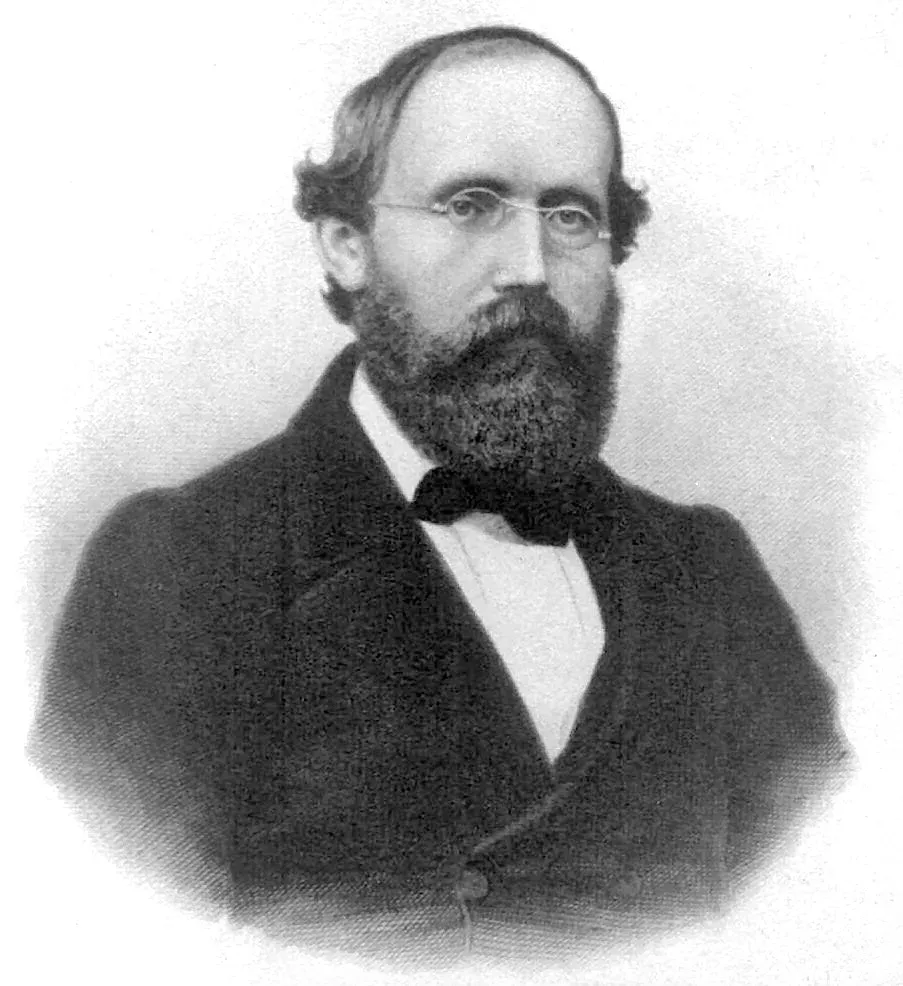
Prime numbers, the ones that can't be split into a product of two smaller numbers, look scattered at random. In 1859, the German mathematician Bernhard Riemann noticed that how often primes turn up is tied to a function now called the Riemann zeta function. His hypothesis says that all the "non-obvious" points where that function equals zero sit on one vertical line: complex numbers whose real part is exactly 1/2.
The Clay Mathematics Institute's official problem page notes it has been checked for the first 10,000,000,000,000 of those solutions. Checking examples is not a proof, though. A proof that every one of them lies on the line "would shed light on many of the mysteries surrounding the distribution of prime numbers," in Clay's words. It is one of Clay's seven Millennium Prize Problems, with $1 million allocated to the solution of each.
Who made the claim, and what exactly does it say?
Alpöge is a mathematician at Anthropic. An August Anthropic research post names him as one of "two of Anthropic's own mathematicians" who checked an earlier Claude result on the zeta function.
His note claims more than the classic hypothesis. "In fact, the method easily extends much further, resolving the so-called Generalized Riemann Hypothesis," he writes. MIT mathematician Andrew Sutherland's verification page spells out the scope: five headline theorems, covering the Riemann hypothesis itself and the generalized version for Dirichlet L-functions, a family of related functions. Sutherland's page is explicit that other families, including automorphic L-functions in general, "are not among the statements that were checked." Alpöge writes that he expects the Extended Riemann Hypothesis to follow "with more time."
The proof is huge. The Lean statement describes it as "a Lean library comprising 17 million lines of code," and Sutherland's checks compiled 175,187 separate modules.
What role did Claude play?
By Alpöge's own account, a large one. "Claude and I have had a great time together with such breadth in recent months, but this time Claude far outpaced me near the finish line," he writes. He describes moments when "Claude began to leave me in awe," and adds: "Tens of such occurred."
The note does not name a model version. Mathematician Terence Tao, writing on his blog the same day, described the result as Alpöge "using an internal AI model" to generate "an (enormous) Lean-only proof." A timeline in the note runs from October 6 to November 16, the date it lists for the generalized result.
The note credits an older idea as a starting point: the argument is "a descendant of Stepanov's," a method used to prove a version of the hypothesis for curves over finite fields. Tao's early read is that the proof "appears to use the full power of modern developments on the Langlands program and arithmetic geometry."
The claim goes far beyond Anthropic's own August research post, which described an unreleased Claude model raising the proven lower bound on the share of zeta zeros on the critical line from 41.6% to 67.2%, and wrote, "We don't expect that the techniques Claude used will lead to proving the Riemann hypothesis."
Has the proof been checked?
The computer-checkable part has been checked heavily. Lean is a proof assistant: if its kernel accepts a proof, every step follows from Lean's standard axioms and the stated definitions, assuming the checker itself is sound. The Lean FRO and Mathlib statement lists four tests and says all four pass. The statement being proved is Mathlib's own vetted definition of the hypothesis, the library compiles, two independent comparison tools confirm the code proves exactly that statement, and several separate proof checkers accept the exported proof.
Sutherland's page, which says his checks were run with Claude Code, records the details. Lean's own kernel accepted the full export after 48 hours and three minutes on one thread, and two independently written kernels, nanoda and con-leche, accept it too. As of the page's last update on November 24 at 05:25 UTC, one run, the lake comparator, was still in progress.
That is unusually strong evidence that the code is valid. It is not the same as mathematicians understanding the proof.
What do other mathematicians say?
Reactions so far are cautious. "If this fully checks out, it is clearly a historic milestone in mathematics," Oxford number theorist and Fields Medal winner James Maynard told Nature, adding, "I suspect that the proof will turn out to be correct." Andrew Granville of the University of Montreal was blunter about the note itself: "What he released is garbled," he told the journal, and he tied the timing to a drop in Anthropic's stock after its IPO. Alpöge's note anticipates that: "There is an obvious cynical view, to do with the timing, but it is false."
There is also a rival claim. Nature reports that on the same day, Stanford mathematician Ravi Vakil shared a preprint by Alessandro Maria Masullo, written without AI, that also claims a proof. Vakil described putting it out as a "hurried announcement." That proof has not been confirmed either.
What is still unchecked?
- A human-readable proof. Alpöge writes that the argument "is incredibly long at the moment" and that "I decided to only present Lean." He promises to "do a proper job in a proper writeup," with no date given.
- Peer review. The note does not mention a journal submission, and the proof has not been published in a journal.
- Understanding. Tao wrote, "I imagine the digestion process will take some time," adding that it helps to have "a human author to communicate with."
- The wider family. The checked theorems stop at Dirichlet L-functions. Broader versions of the hypothesis are not covered by the checked claim.
Has anyone won the $1 million Millennium Prize?
No. Clay's prize rules set three conditions before it will even consider a solution: it must be published in a qualifying outlet, at least two years must have passed since publication, and it must have "received general acceptance in the global mathematics community." Clay also says it "does not accept direct submission of proposed solutions." Its Riemann hypothesis page, checked on November 25, does not mention the claim. Under those rules, no award could come before late 2028 at the earliest, since the two-year clock only starts at publication.
Interest is enormous either way. The English Wikipedia article on the hypothesis drew 964 views on November 19 and 388,288 on November 21, according to Wikimedia's pageview data. pblcty has also covered OpenAI's own big math claim, on the matrix multiplication exponent, which also waits on peer review.
FAQ
Is the Riemann hypothesis solved?
A proof has been claimed and its Lean code has passed independent machine checks, but it has not been peer reviewed or published, and mathematicians have not yet worked through the argument, so it is not accepted as solved by the usual standard.
Who claims to have proved the Riemann hypothesis?
Levent Alpöge, a mathematician at Anthropic, who says he found the proof working with Claude.
Did AI solve the Riemann hypothesis on its own?
No one has said so. Alpöge describes it as joint work and says Claude "far outpaced me near the finish line."
Where is the proof?
Alpöge's note links the Lean code from his site, alpo.ge. There is no prose version yet.
Does the claim win the Clay prize?
Not under Clay's current rules, which need publication in a qualifying outlet, a two-year wait and general acceptance first.
Sources
- Levent Alpöge: announcement note (PDF, alpo.ge), released November 20, 2026
- Lean community blog: Lean verification of the Riemann Hypothesis, joint statement by the Lean FRO and the Mathlib Initiative, published November 21, 2026
- Andrew Sutherland, MIT: RH Lean proof verification files, updated November 24, 2026
- Terence Tao, What's new: Unforced Euler singularity, unforced Navier-Stokes singularity, and the Generalized Riemann Hypothesis, published November 20, 2026
- Clay Mathematics Institute: Riemann Hypothesis
- Clay Mathematics Institute: The Millennium Prize Problems
- Nature: Mathematicians astounded by AI and human-written proofs of iconic Riemann hypothesis, published November 20, 2026, updated November 23
- Clay Mathematics Institute: Rules for the Millennium Prize Problems
- Anthropic: Claude has improved on a longstanding lower bound for the fraction of zeros of the Riemann zeta function that satisfy the Riemann hypothesis, published August 10, 2026
- Wikimedia: pageviews for the English Wikipedia article "Riemann hypothesis"
- Wikimedia Commons: portrait of Bernhard Riemann, 1863 (public domain)
This story was reported and drafted with AI tools from the sources linked above, fact-checked, and edited by Parth Garg. How we use AI.