OpenAI's countersuit says Apple set an iCloud trap
The 81-page filing also says a worker took dozens of OpenAI documents back to Apple. Apple calls it a distraction.
Key points
- OpenAI, its io Products unit and two former Apple employees filed 12 counterclaims against Apple on November 27 in San Jose federal court.
- The filing says Apple pushes staff to keep work files in personal iCloud accounts, then sues them for having those files.
- It also says a worker it calls "Employee X" took dozens of OpenAI documents back to Apple in 2026.
OpenAI's November 27 reply to Apple's trade-secret lawsuit opens its argument with a song lyric. Apple staff, the filing says, "were joining Hotel California: 'you can check out any time you like, but you can never leave.'"
That line comes in the first paragraph of the 81-page answer and counterclaims filed in the US District Court for the Northern District of California. It argues that Apple "created a situation in which it can accuse virtually any departing employee, and their new employer, of 'stealing' purported Apple trade secrets." Tang Tan and Chang Liu, two former Apple employees Apple also sued, joined the filing.
Apple's own iCloud rules are the trap, OpenAI says
Apple sued OpenAI, Tan and Liu on July 10, 2026, according to the court docket. Apple says they took company information to help OpenAI build its own hardware, Anadolu reports. OpenAI's reply says Apple encourages employees to store work files in their personal iCloud accounts and to do business over personal iMessage.
So people who quit, the filing says, still have Apple material. Keep it, and Apple can call it theft. Delete it, and Apple can call it destroying evidence. The filing says "400 Apple employees have left Apple for OpenAI so far," and claims Apple wants to scare off the next 400.
The filing says Liu's manager asked him to stay signed in to his personal iCloud account on the Apple-issued device he handed back, so the manager could copy his work files. It says Apple stayed signed in until January 30, 2026, while Liu's personal iMessages kept syncing to that device. Yet Apple's own Personal Safety User Guide, the filing notes, says: "Don't share your Apple Account with anyone, even family members, partners and close friends."
OpenAI says a supplier moved its work to a night shift
The filing says Apple staff asked factories serving both companies to name the workers assigned to OpenAI. One manufacturer stopped doing OpenAI work. Another moved OpenAI's parts to a nighttime shift of anodizing, a metal-finishing step, after Apple objected to them sharing a line with Apple production.
OpenAI says "Employee X" went back to Apple with its files
OpenAI's trade-secret claim rests on Employee X, who joined OpenAI from Apple on December 2, 2025, and gave notice on May 19, 2026, saying he planned to care for family in China. He left on June 2, after sending "numerous confidential and trade secret OpenAI documents" to a personal account, the filing says, then rejoined Apple. It also says he briefed senior Apple Asia-Pacific operations staff on OpenAI's hardware roadmap in July. That part is pleaded "on information and belief," meaning not from OpenAI's firsthand knowledge. OpenAI sent Apple a cease-and-desist letter on October 9.
Employee X starts at OpenAI.
Employee X's last day at OpenAI.
Apple sues OpenAI, Tang Tan and Chang Liu.
OpenAI sends Apple a cease-and-desist letter.
OpenAI, io Products, Tan and Liu file 12 counterclaims.
Twelve claims, split three ways
OpenAI and io Products, the hardware company Tan co-founded, bring four claims: trade-secret theft under federal law, interference with supplier contracts, and two under California's unfair competition law. Liu brings five, including invasion of privacy and two computer-access claims over the iCloud episode. Tan brings three, aimed mainly at Apple's employee agreement. They want damages, injunctions and a jury trial.
Apple called the filing "a transparent attempt to distract from the substance" of its case, according to Euronews. The company says its case is about deliberate theft, "not about inadvertent retention of Apple information." OpenAI has already pledged not to use the information Apple calls trade secrets, after the judge raised a possible order, Euronews reports.
Both sides now accuse the other of taking files on the way out the door, in a fight that shapes OpenAI's push into devices that would compete with Apple's. If the iCloud argument works, the case stops being about what two former employees took and becomes about how Apple runs its own staff accounts.
What we don't know yet
None of these claims has been tested in court. OpenAI has not named Employee X or the suppliers. The case sits with Judge Edward J. Davila.
Sources
- US District Court, N.D. California: Apple Inc. v. Liu, Defendants' Counterclaims and Answer (ECF No. 217), filed November 27, 2026
- CourtListener: Apple Inc. v. Liu docket, 5:26-cv-07078, filed July 10, 2026
- Euronews: OpenAI and Apple accuse each other of committing trade secret theft, OpenAI countersues, published November 28, 2026
- Anadolu Agency: OpenAI files countersuit against Apple in dispute over alleged trade secret theft, published November 28, 2026
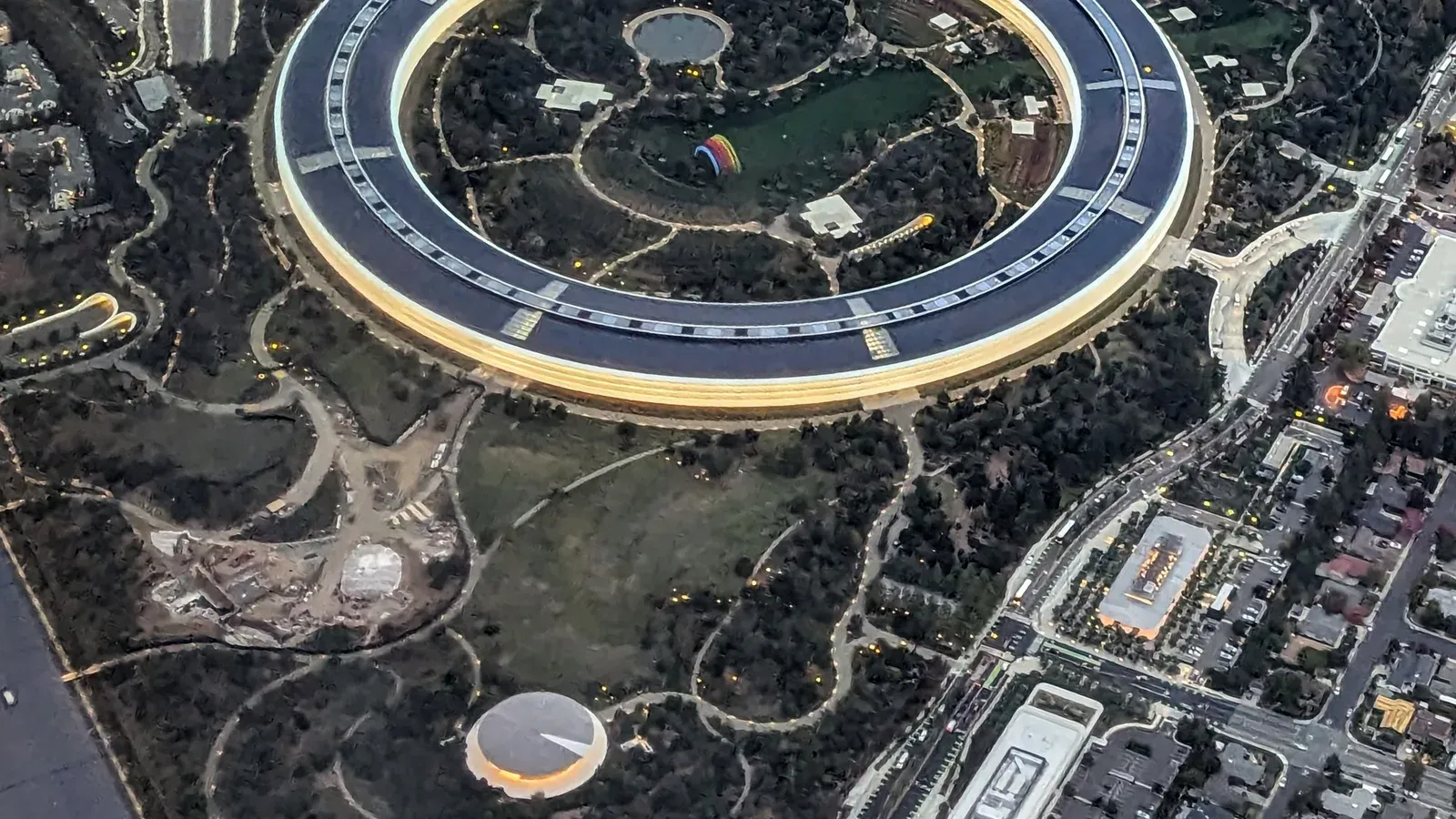
- Wikimedia Commons: Apple Park dusk aerial, by Dicklyon (CC BY-SA 4.0)
This story was reported and drafted with AI tools from the sources linked above, fact-checked, and edited by Parth Garg. How we use AI.
Related on pblcty